1 Jul 2013

Andreas again

Sunniva and Andreas, photo: Anna Victoria Johansen

This is from our first meeting on Thursday. We get along well. He's a chubby, quiet little person, who fell asleep to Usher while I was rocking him in an armchair.
I do have plans now that I am home. I also have more photos and stories from my last days in Nicaragua, and my first days here. It will come. At the moment I am enjoying seeing people, and also enjoying the midnight sun while being confused by it, especially combined with jetlag and very transparent curtains. 

30 Jun 2013

NORWAY

I'm home,
I've met my new nephew Andreas (bottom) and danced with my niece Dina. I've met pretty much the entire family on my dad's side, and gone to town and met my friends. I'm a little behind on everything that has to do with computers and communications that way, but it's coming along.

27 Jun 2013

Travel

Waves in Puerto de la Cruz, Tenerife, Christmas 2012
(could also be El Bluff, Bluefields or San Juan del Sur or Port Limón, Costa Rica (every place but San Juan is the Atlantic))

According to plan, I should now be somewhere in the air over this same sea. All fingers crossed for no delayed flights out of the four I'll be taking: 
  • Managua-Panama
  • Panama-Amsterdam
  • Amsterdam-Oslo
  • Oslo-Tromsø

26 Jun 2013

Om nom

Just about to leave this

but I'm going home to a much healthier food culture in general, and a healthier style of living, with less deep-fried everything, less starchy starch foods and fewer oh-but-you-must-finish-your-plate meals.

I wish I could go and stay at the same time, why can't I? 

25 Jun 2013

All my clothes

My grand amount of clothes in San Juan del Sur, June 3rd
is now greatly diminished
as I've left pieces here and there

24 Jun 2013

Costa Rica

 Look, I'm in England!

 OH WAIT I just went to the Caribbean

Where I had a smoothie, that's all

After San Juan del Sur, I took the bus to San José in Costa Rica. There, I stayed with Gaby and her family, people I'd never met before, but who took very good care of me. It was almost English/Norwegian temperatures there, I got lulled into the safe family setting, and did almost nothing the first six days I was there. Oh, I had cake and tea and met family members and had ice cream and played Rummikub and tried to learn Gin Rummy and failed, but it wasn't quite what I'd imagined when I went to Costa Rica.

I also did manage to get a cold due the climate change, and am now dreading to go home to Tromsø. Last Sunday I'd decided it was enough, and I took a bus down to Port Limón on the Caribbean coast of Costa Rica, and languished there three days, sleeping twelve hours a night, drinking six liters of water altogether and waking in the night from my cough. I also had at least one smoothie daily, looked at beaches, had coconut water, coconut bread, and talked to random people I met.

After the Caribbean had cured my cold (well, almost. Kind of) I went back to my new family in San José, spent too much time inside, editing photos and watching Spanish-dubbed films, went to a brilliant museum and watched a play of Pinocchio with Gaby, before I ran back to Nicaragua, and am now in Granada. 

22 Jun 2013

Bosawas/Musawas


And then, more about this place I mentioned weeks ago.

One Sunday in May, after the longest bus ride in history, one night of sleeping in a parking lot, one night of sleeping three in one bed, and plenty of long meetings, we walked three hours into the woods and up the mountains in this beautiful natural reserve of Bosawás, to the village of Musawas, where the indigenous Mayangna live. We were supposed to have a meeting with the village, or with one board, or with another, and we spent two hours listening to them discussing in Mayangna about whether we were allowed to have a meeting, and with whom, and why we were even there.

They said they are now sceptical of people coming from outside to "help", because they have several experiences with those who come, appropriate their culture, and run back home to earn money off what they've learnt.

We ended up taking the meeting outside, because apparently our previous agreement wasn't official enough to have a village meeting in the village hall. We split into two groups: one sat around members from the Territorial government, the other around those from the local council (unless I am confusing all these councils again). I was with the territorial government.

Both groups could tell us that yes, they had problems. Mestizoes from the west and south were moving into the reserve, cutting down far too much wood, working for profit rather than survival, and not respecting that it was a reserve, that the indigenous people had the right to use the forest as they had traditionally, but noone else should come and ruin nature. The territorial government people were quick to point out though, that they had done something to prevent it. That the state was completely on their side, all they needed was a little time and these migrants would be kicked out. No problems here. - "But we heard there was an assassination of the past president for the territorial government?" - "NO. Accident. Accident, it was."

Certainly. The people in the other group said clearly that the former president had been killed. Two very different versions. They were also clear about the fact that they do actually have problems, people are still cutting down rain forest, and it's not going to go away just like that. I'm sadly going to believe the most pessimistic view of this last group, which some of the girls got to hear while the rest of us were sat discussing problems with people who claimed not to have any.

21 Jun 2013

Taking the bus from Port Limón to San José

upstairs in a double-decker bus

I saw a sign, and thought "what? I'm in a national park? We're driving through a national park? That's cool. I like being surrounded by trees, they're nice things to be surrounded by" and then thought "we're driving through a national park". For miles and miles, with heavy transport ahead and behind us.

Costa Rica is seen as a very environmentally forward country. At least 25 % of its area is protected land. The greenest country in the world.

And I realised I had to update my knowledge about the term national park. Even so, this definition seems to suggest that you shouldn't make one of the main roads between the coast and the capital straight through a national park:

"In 1969 the IUCN declared a national park to be a relatively large area the following defining characteristics:
One or several ecosystems not materially altered by human exploitation and occupation, where plant and animal species, geomorphological sites and habitats are of special scientific, educative, and recreative interest or which contain a natural landscape of great beauty;

Highest competent authority of the country has taken steps to prevent or eliminate exploitation or occupation as soon as possible in the whole area and to effectively enforce the respect of ecological, geomorphological, or aesthetic features which have led to its establishment;

and Visitors are allowed to enter, under special conditions, for inspirational, educative, cultural, and recreative purposes."  Wikipedia (my friend)

But then again, there are so many different guidelines and terms and different levels of protection and what not, so I'm not sure. I'm still learning a lot about reserves and the like - such as how a preservation act can harm the lives of the people living there, more often than not indigenous groups who just want to chop their firewood and build their houses in the areas.

19 Jun 2013

This is what I look like when I pretend like I don't have a cold

for those who wondered

and I haven't taken the bother to edit photos for you - Costa Rica is nice and green, but I am lazy and sick, so, well. Sorry. Will come after a while though!
In one week I will hopefully be on my way, at least I will be at the airport right about now.

16 Jun 2013

Let's see if this works


I've been a bit ill the past week, it appears the "cold" and "dry" weather of Costa Rica (or at least San José) has defeated me - it is after all only 24-25 degrees here, and the air is a lot drier than at the Caribbean coast. I haven't been able to do all I wanted to do, and I miss home more and more every day, as I'm making plans to have coffee and cakes with my family, meet my new nephew Andreas, and eat all the Norwegian food I can manage.

So here's a video I took with my rubbish phone camera in January, where I'm trying to convince Dina to show me how tall she is.

11 Jun 2013

Costa Rica

*this might be from the Spanish School in Matagalpa, but at least it's green

I'm here, I'm here. I'm in another country. I'm staying in San José, the capital, as of now, with Gaby, a friend of my friend Juan, who studied with her here, and now studies in Tromsø. I'd never met Gaby before yesterday. She is lovely, her family is lovely, and when they all speak Costa Rican Spanish rapidly with each other, I can't understand a thing. All my plans are slightly vague, but I'm certain that I will Do Stuff and Meet People and See Things. More to come!

9 Jun 2013

San Juan del Sur, Nicaragua

is where I've been staying the past week,
staying with a family in a homestay,
taking three hours of Spanish five of these days,
reading the nine hundred pages of Shantaram,
going to at least one beach daily,
swimming several days,
going out with my new, maybe temporary, friends, three nights,
taking one photo each day,

and hardly looking at a computer, not having wifi, and only borrowing the school computer or paying 20 cordobas per hour at an internet cafe to write messages to my family and friends.

Tomorrow, Monday, I have a bus ticket for San José, Costa Rica, and then we will see.

2 Jun 2013

All the parties

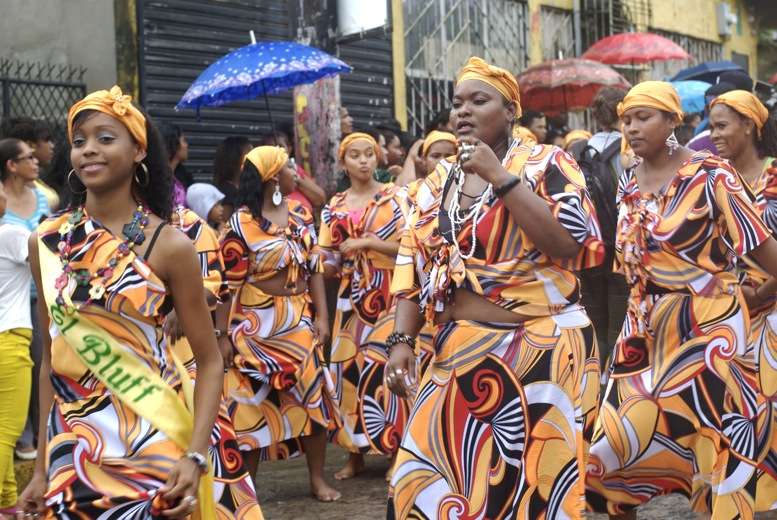
 Started last Saturday, 24th May, with a parade in Bluefields

 With old misses

 young misses

 young gentlemen

and old ladies, all dancing through the streets

We took breaks from working (and we worked hard) with the information work we'll be doing, writing articles and publishing stories from our experiences, by going out in the streets to watch parades and meet people. We met friends of friends, were invited to concerts, saw Miss Bluefields in the park, made rondon (local dish) and had another concert with our new friends, had a goodbye dinner and went out to see another parade and went to another concert and went out dancing again, then went home to sleep two or three hours before catching the morning panga on Saturday. We left Bluefields. We left Rama. We left RAAS, the region. We arrived in Managua, and left that too. Now we've been one day in Granada, seeing things and jumping off boats, and tomorrow I'm going to San Juan del Sur, all on my own, leaving the other girls completely behind for the first time since January 2013.
Adventure. And stuff. 

29 May 2013

Bosawas

Astounding nature reserve, where indigenous people happen to live,
where other people are closing in on its borders and cutting down trees and more trees.
More to come. 

27 May 2013

How to run your farm

 Plant a lot of fruit trees, in seemingly random order
Throw some palm trees in there, especially close to your house

Then bring your Norwegian visitors out between the trees, and astound them by pointing out that every tree is of use and has a fruit on it, and gather guava, mango, some random fruits that look like nothing else, and pick the cashew apples with cashew nuts on them.
This is the farming alternative they are trying to encourage the farmers to do, the old fashioned way of having a little bit of everything. Increasingly, poor farmers in the area are selling off their land to the african palm company at Kukra Hill, or planting just one type of tree, or plant, because they can, or think they can, earn more selling it and then buy their food instead of growing it.

And I wonder whether it's not just me (and some organisations) being romantic, wanting the farmers to live in the past, working only to feed themselves and their families, while I myself "need" money to travel, to buy food, clothes, and equipment. I think the answer must lie somewhere in between.

25 May 2013

Just kidding

We're not on Corn Island, we're back in Bluefields since yesterday. We had a discussion about where would be the most practical place to work - and where people would be more likely to work - and ended up just going back to Bluefields. We had plane tickets from Bilwi to Corn Island via Bluefields, so it was easy enough to jump off here, even though it might have been hard to give up the dream of going to a Caribbean island.

Anyways, we're here, where internet is scarce as ever, trying to finish and work on several products at once, as well as being social and having a good time before we leave in a week's time.

This part of the project will then be over, and I doubt we will ever be all nine together in Nicaragua again. We will meet for seminars and planning and arranging talks and activities all this autumn, and of course I hope we'll stay friends, but this, this being together, sleepingeatingworking together will be over very soon.

Ms Suzanny's farm

is a chicken perched in a tree, by Ms Suzanny's farm

We stayed three days by Ms Suzanny's farm. She couldn't come herself because she was ill (and all Rocky Point people have houses in Pearl Lagoon, the town), but we stayed with her daughter Mirla and Mirla's husband Jean. We got to walk far and visit a very strange man who had been in the US Marines far too long, I showed off my coconut milk making skills, Johanne had a fever and then we left. It was very peaceful being there, in the middle of the woods (as per usual), with a slightly younger couple than the others we have stayed with.

23 May 2013

Rainy Season

 Started one day, 26th April, ended the same day, 26th April

And there was nothing to do but get everything in and stay inside

The rainy season here is supposed to be between May and December, and it's the "winter" in Nicaragua. Ms Florence kept saying the 15th of May, and she seems to be right. We started with one day of forewarning, the 26th of April. And I am telling you: Rain. It is amazing and astounding and completely unimaginable, how much it's possible to rain in one day, or at once. And this comes from someone who has lived in Falmouth, England. More rain than the most heavy, hard rainfall you can imagine in Falmouth, and we did have some rain there too. I feel bad for the next group coming here, since they will be here between September and December, and get a lot more winter than us.

21 May 2013

Turkeys and outdoor showers

 Hello, unfriendly male turkey, you must be looking for

 your wife, hatching eggs all day inside the latrine, keeping us humans company
or maybe you're cross after running into Johanne showering down by the well?

By Ms Florence, we shared our latrine with a massive female turkey trying to hatch her eggs, poor thing. We also had a flimsy curtain in front, looking directly at the house. Our sense of privacy was further challenged by the fact that the bath was the forest - that is, the trees down by the well, not too far from the house either. This is when you learn to trust in people and hope for the best. And it's perfectly fine.

19 May 2013

Jack/animals in captivity

 Jack, my dear friend
                                                                     And Johanne's best friend and hair eater

We've seen this so many times: monkeys and parrots in captivity, the birds with their wings clipped and the monkeys on leashes or just short ropes. Jack was caught by Ms Florence or her son, and has been staying at their house at least two months from when he was just a baby monkey. He showed clear notions of distress, constantly running up and down, shying away from both his owners, and aggressively tearing off bits of the cane the house was made of and eating it. Again, I shouldn't be surprised that people don't think about the feelings of animals, but they really don't seem to notice it at all.

17 May 2013

GRATULERER MED DAGEN

Norway Day 2012, random person, Ingrid, Christine, me and Xiomara

Today is Norway Day, if anyone had forgotten. And I'll be celebrating it in a minivan with the girls in my group, but also with our coordinators, one of whom doesn't like the nationalism implied in celebrating the constitution day. I'll try to eat some ice cream and cake if I can find it.
Here's a greeting to all Norwegians and friends-of-Norwegians (so that's all of you then): Hurra! Hurra! Hurra!

15 May 2013

By the way, on my way

Plans are changing all the time, so now I'll be

14.-16. May: Managua, meetings and more meetings
17.-24. May: North Atlantic Autonomous Region (RAAN) - meetings and more meetings - exciting
24.-30. May: Corn Island hopefully, working and chilling at the same time
1. June: Leaving Bluefields, finished, hopefully going to the Pacific side for some time and then maybe Costa Rica way.

Conclusion: I'll be gone the next two weeks without much internet access (again), so please expect only infrequent updates.

14 May 2013

Ms Florence & Don Juan

 The first two weeks of this stay, we were with Ms Florence, her husband Juan and 

 Jack, a monkey they had caught and kept on a leash

 And the most beautiful flower garden at Rocky Point

Here they are: don Juan (89) and Ms Florence (67)

These two are the most amazing couple. They got married when he was 45 and she 23, after he'd followed her to the Atlantic Coast to ask her parents for her hand. They have eleven children, as far as I can remember. Don Juan is a "Spaniard" from the Pacific side of Nicaragua, Ms Florence a creole lady from Rocky Point. He never learned English/Creole English through their 40-odd years of marriage, she speaks a mix of Creole and Spanish, and will just switch over any minute. They both work hard at the farm every day, she wears skirts (and short ones too) no matter what she's doing, chopping, weeding, getting the cows in.

I learned to clean the area around the cocoa trees with machete, ground cocoa beans, and finally, how to cook rice and beans with coconut milk. The new families we've been with now have been amazed at how Johanne and I can grate coconut and make coconut milk, which we've been experts on since we first stayed with Ms Connie. The best thing about this stay was coming back and feeling more at home at Rocky Point - we knew the people, the bus schedules, the small paths through the woods, the cuisine, and it felt like a second home.

13 May 2013

Lush

That's all

Will write more cohesively later

11 May 2013

Bluefields, boy

Looking pale as always

I'm here again, and it feels like such a short and such a long time since last I was here. We're only staying until very early Tuesday morning, when we leave for Managua, then the Northern Atlantic Autonomous Region (RAAN) to meet more mayangnas (another ethnic group) and visit some mines. Internet is scarce, but I'll try to post some more before I go.


I miss Rocky Point already.

8 May 2013

Happy Birthday Henry

My good friend H.

I think I raved too much about this last year, but imagine, without Henry Dunant there would be no Red Cross. There would probably be different charities, just like now, but no Geneva Conventions, no neutral organisations to work in war time... This man, seriously.

6 May 2013

Religion

Our second farm stay in Rocky Point back in March was with Seventh Day Adventists. It was a more difficult stay than at the previous farm. Partly because we had very different personalities, partly because of their religion. They don't eat shrimp, don't allow dancing, don't drink caffeine (this also includes black tea, of course), and probably have more rules that we weren't aware of. While their religion has many beliefs, and is very open about discussing the Bible – even in church, they have discussions – the main difference from other adventists, the most obvious from other churches, and what meant most to our hosts is that they keep the Sabbath holy – i.e. Saturday.

I am certain that Seventh Day Adventists are nice people. Even in Rocky Point (which is where I know the most) there are others, more open, more relaxed. But these ended up being specifically provoking, because they were so closed. What they spent their entire Friday night and Saturday – all day- preaching, was the different Bible verses where the ten commandments are mentioned, and putting a lot of emphasis on the word Sabbath – which in the Norwegian Bible, as far as I know, is "resting day".

I'm trying not to write too much about this, since religion can be very difficult. But my main point is this: If your entire church attendance is spent on repeating the ground rule of your religion, I don't think the religion is doing you much good. If all your days are spent praying (0500-0600 am and 0800-0900 pm), when do you get to be a good person, like you are praying for?

But also, this is what I wrote in my notebook when we stayed one night with some other (very nice! Very busy doing good things and not discussing the Sabbath all day long!) Seventh Day Adventists:

A religion that means it's more accepted to make fun of someone with Down's Syndrome than to dance a little – both in front of your mum – can't be a healthy religion.

29 Apr 2013

Gratulerer med dagen, Elisa

Margetshöchheim, Würzburg, Germany, May 2011

My cousin Elisa will be fourteen years today, if I haven't completely miscounted. This weekend she'll be going through her Confirmation, a sort of coming-of-age-rite in both Norway and Germany. It used to be religious, but, especially in Norway, is now more of a standard thing teenagers go through, with a ceremony, a family feast, and presents. I really want to go, to see my family in Germany, but it doesn't compute with being in Rocky Point, far, far away.

Gratulerer med dagen, og gratulerer med dagen på søndag!

26 Apr 2013

Blue Energy

 Chris and Stephanie - really wonderful people

This house now has an outdoors light and an indoors light


Blue Energy is a company that works at Rocky Point and in other communities, but are based in Bluefields. We've met several representatives, especially when we went to help them with setting up solar panels at a house in March. We even met one in Managua during our holiday. They all seem lovely, and very into their work.

The only thing I wonder about is what they are. NGO, they say. Non profit organisation, their website and Wikipedia (LINK) says. Blue Energy consists of several employees, and many volunteers. There are different volunteer programs, some of the shortest ones are called internships. Their website makes it seem as if they give the communities they work with, all the water, sanitation, and electricity they could want, if only you would donate some more money.

I like Blue Energy. I think a lot of what they do is important. It is true that a lot of the families at Rocky Point wouldn't have electricity without them. But they fail to mention (or at least they try to obscure) that the villagers pay for what they get. Let's take solar power as an example. They have a program for rural, poorer areas, which means that the owner of the house pays 25% of the price for a solar panel, which is about 25 USD. Then, the volunteers/interns pay – voluntarily, but if not, you can't join the program – the other 75 USD. And if you're not from a rural, poorer area, you're paying full price. And as good as solar power, wind power, and getting clean water, can be, I don't think it's right to promote this image of charitable volunteers that they do like to spread. Here is a slightly critical, and also slightly weird, interview.

Being here brings up a lot of thoughts and discussions about charity, about donations, about companies and organisations and how we aim to help others. Even one person I talked to from Blue Energy admitted that some of their projects weren't a resounding success.

All that said, Blue Energy does a lot of good work. I'm just sceptical to companies that have the volunteers pay to work for them.

21 Apr 2013

Back to the holiday

 We went to Isla de Ometepe, where we some of the most beautiful sunsets

 Sunniva, Gro Malene and Julie, some of the most beautiful women (just kidding)

 (Not really)

 Some big, old volcanoes

 Some monkeys

And then the two volcanoes once more

Our holiday at Ometepe started in a lousy way, when we realised the hostel we had was far from everything, taxis were ridiculously expensive, and all the other hostels on the island were packed with Easter tourists.
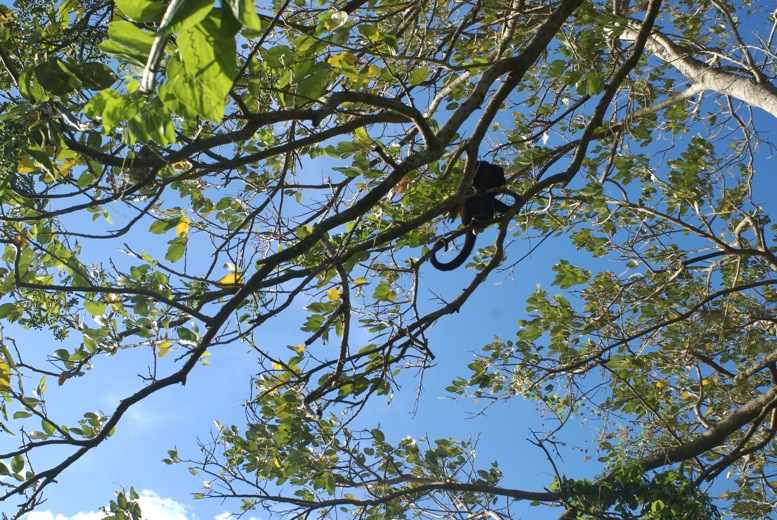
Then on Thursday (we came on Monday) we went to one of the towns, had a good breakfast, and went sightseeing with a guide to drive us around. We went to a point where we could see both volcanoes, and then we went to a mineral pool far into the woods, which was also packed with Easter tourists, but which was also cool and tranquil and nice. Later on we went on a walk to a nearby lagoon, spotted some monkeys, I climbed a tiny hill, and we met some random Nicaraguans that we had dinner with and got to practice Spanish with. Do-it-all-Thursday.

I'm now trying to plan my holiday in June, so if anyone has any Central America- travelly tips, you're more than welcome to share them with me.

16 Apr 2013

Back to our communities

Photo: me
 Johanne and I stayed in Rocky Point, which you've probably heard enough about by now. In short, it is a mostly black creole farmer community, close to Pearl Lagoon, where people live on separate farms. We've learnt how to make coconut oil, and how to eat anything made with coconut and coconut oil.


Photo: Line Bellingmo Johnsrud
 Ingrid and Line stayed in Orinoco, a Garifuna community which lives mainly off fishing. They've learned to dance, drum, make rondon and eat pretty much anything.


Photo: Mathilde Gabrielsen Vikene
 Mathilde, Julie and Nadia have stayed with a school at Wawashang, meeting students from all the different communities and ethnic groups, having classes in Spanish and Geography. They've also stayed at the nature reserve of Kaka Creek, and with a mestizo family on a farm in the area.


Photo: Elise Øksendal
Gro Malene and Elise have stayed in Kakabila, a Miskito community where people live off fishing and farming. They've stayed with many different families, worked with houses, in the woods, and are now going to paint a mural with the children there.

Everyone is going back to their previous communities in the same groups as before. We would have been able to change places - and partners- if we'd wanted, but noone seems to want to. After spending one month getting to know people, getting into a culture and their practices, you don't want to start all over again. All the villages here are distinct from one another, and most of what we hear from one another is different.

14 Apr 2013

New itinerary

10th April: Pearl Lagoon – political program, meetings

14th April: Rocky Point – new families/farms, still with Johanne

10th May: Back to Bluefields. Political program, writing, working with information, planning what to do when we come back to Norway

1st June: Holiday-time, program finished. Spanish school? Pacific Coast? Costa Rica? Who knows?

26th June: Fly home

27th June: ARRIVE in Tromsø

12 Apr 2013

Spoilt child

How most meals are cooked in Rocky Point - this is the improved oven

That's me.

I first realised when I moved to England and moved into student blocks on campus, and everyone else were exclaiming happily about the water pressure in the showers while I complained about the dingyness of the kitchen. The second year there, we moved into a student house, and my Norwegian housemate and I complained about the carpeted floor (difficult to hoover) and the green-painted kitchen. The others were happy to have a student house that mostly worked, albeit without internet the first six months.

What I realised was that even in (Western) Europe, where I'd imagined (I was but 19 years, remember) most things were similar, Norway is a country with a lot of luxuries built-into everyday life. Like constant hot showers.

So when I finally went to Nicaragua in February, I was oddly enough quite prepared for meeting the different standards. Because I'd gone to England, which I find weird. Yes, it did take a while to get used to bucket showers, and having to get water from the well to flush the toilet. But it didn't shock me. And I realised how lucky we were, coming from Norway to visit this country – we all know we're going back to running water and electricity-filled houses.

Then we went to Guatemala, and I realised that even Nicaragua was luxury. Not in terms of water – it's pretty much the same. But in being able to live in peace, without worrying about the state, or companies, taking over your land. Without an active military getting into your business. Living in Nicaragua isn't always that easy either, but people here are more relaxed – because they can be.

So yes, to conclude this jumpy text, I am a spoilt child. Again, sometimes I wonder what we are doing here, coming as visitors to see how people are living, lowering our standards, hearing what they've experienced, happy that it's never happened to us, and then leaving again. To super-ultra-mega-safe Norway, where hardly anything happens. Where we have all the luxuries without realising they are, in fact, luxuries.